What Time Perception does
Using biometric signals, in real time.
Ambient sensory cues ease people out of unproductive hyperfocus.
A new category that shows how someone's sense of time shifts.
Hours vanish, and alarms don't help.
Have you ever been so focused that hours vanished, and you forgot to eat, drink, or move?
For 11 million adults with ADHD in the US, this isn't occasional. It's daily. Their brains filter out time cues and body signals during focus, so time feels binary: "now" vs. "not now." Traditional alarms fail here. They're jarring, anxiety-inducing, and designed for brains that can already sense time.
Current tools assume neurotypical time perception. We built for those who don't have it.
Who is this for?
Based on our user interview and research on community forums and scientific articles, we built one persona to keep every decision grounded.
Age: 28
Location: Vancouver, BC
Occupation: Student and UX Designer
Diagnosis: ADHD-PI (Primarily Inattentive)
Device: iPhone user
"I wish deadlines felt real before the night before they're due."
- Talented designer who thrives in flow states (sometimes too well)
- Can lose entire afternoons to a single task
- Has tried time-blocking, Pomodoro, alarms, sticky notes. They don't stick, or they spike her anxiety
- Doesn't want to be managed. She wants to feel time the way other people seem to
Why does this matter?
We found that people with ADHD experience three pain points:
ADHD affects the brain's internal timing circuits, resulting in systematic underestimation of time passed.
During sustained attention, the ADHD brain can't receive body signals like hunger, thirst and discomfort.
Alarms trigger automatic dismissal or anxiety spikes, without addressing the sensory gap underneath.
What does this mean?
Users must think about time to know it.
Users feel time without thinking.
From vigilance to feeling.
Our primary wellness goal: reduce time-related anxiety and improve self-regulation, without requiring constant vigilance and willpower.
Target wellness behaviour change
What can they perceive now that they couldn't before?
- Poor awareness of what time it is, and heavy effort to try
- Hyperfocus tunnel vision with no sense of time passing
- Checking clocks constantly (anxiety) or never (time blindness)
- Body signals like hunger and thirst don't reach awareness
- Peripheral awareness that significant time has passed, via ambient cues
- Gradual sensory shifts create natural exit points from unhealthy activities
- Passive absorption of time information without active checking
- Gentle surfacing of body state during extended focus
Time Perception
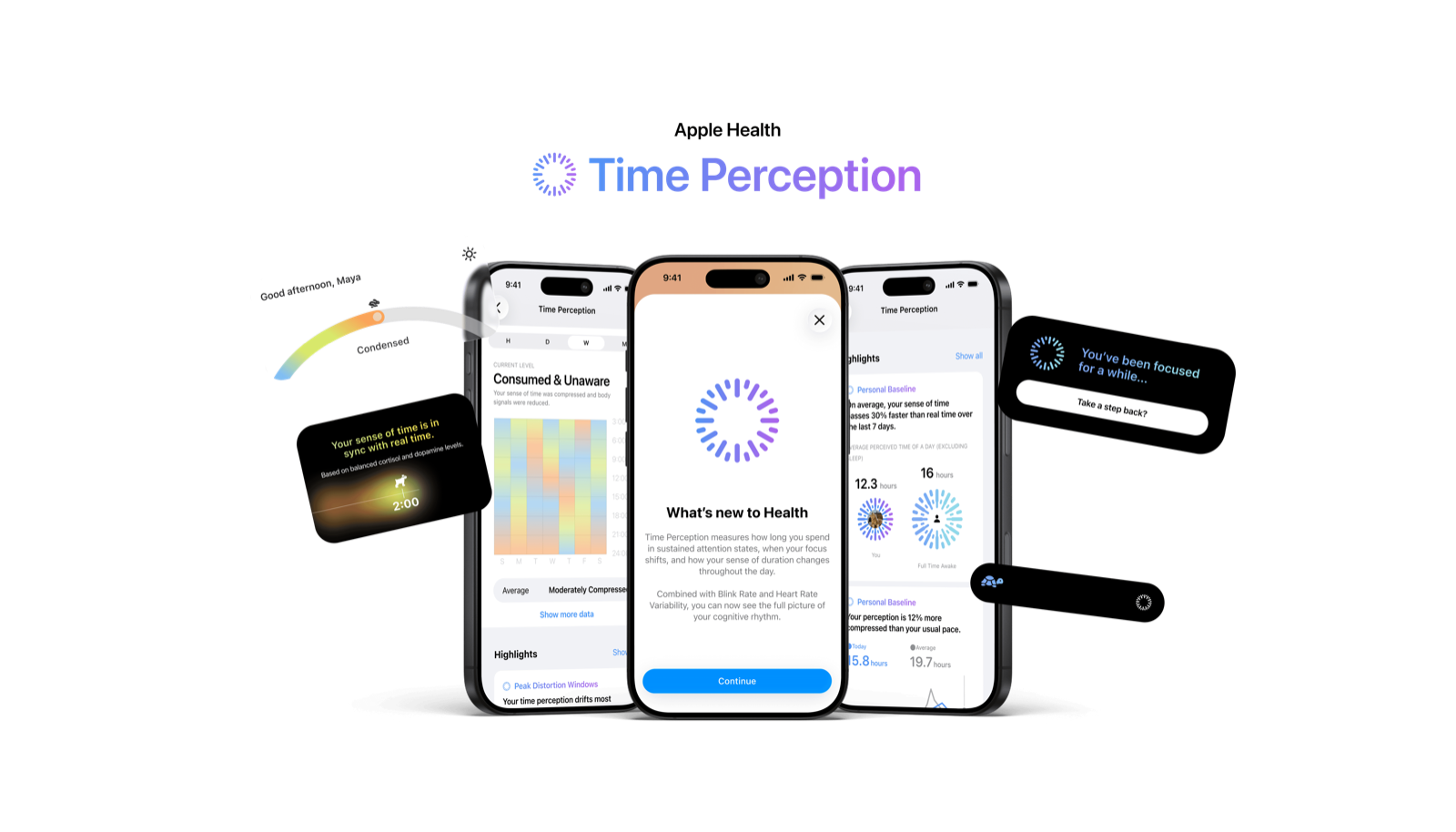
A new category in Apple Health that tracks how your brain experiences time, so you can understand your focus, catch time blindness early, and build a day that actually works for your mind.
Condensed (time seems to pass more quickly)
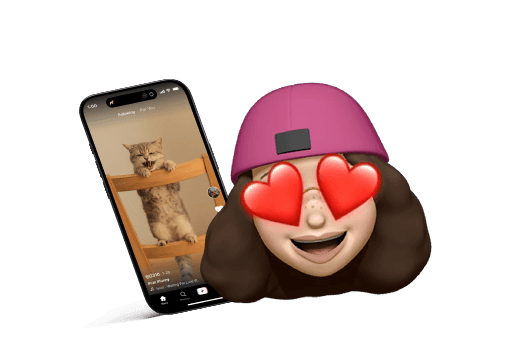
Maya doomscrolls every day for hours before realising how much time has passed.
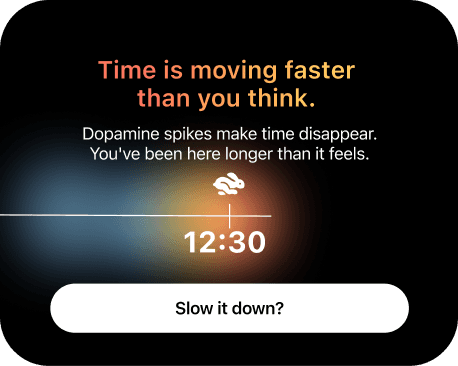
The island expands quietly, without sound or vibration: "Time is moving faster than you think."
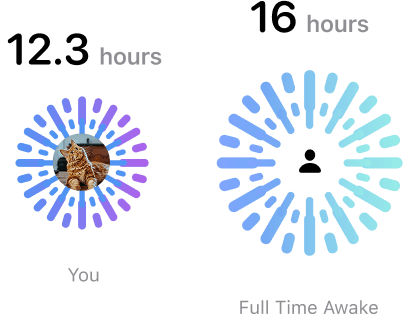
In Apple Health, her time perception is tracked with internal body data, surfacing patterns she can act on.
Synchronized (perceiving time at its actual speed)
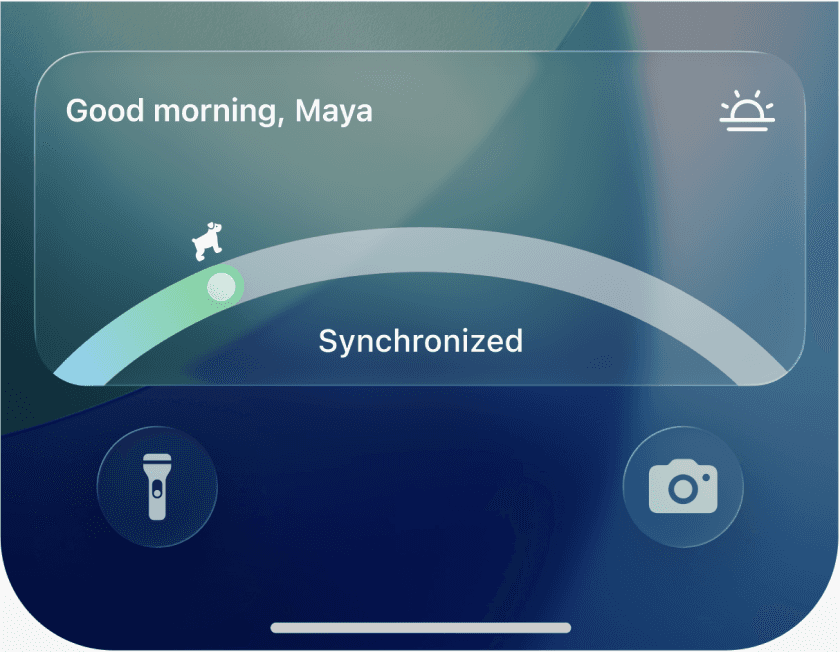
Maya has a rare, effortless morning. A subtle widget shows where her internal clock is right now.
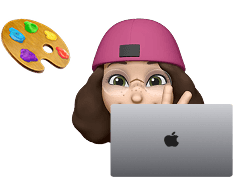
Today it reads: Synchronized. A perfect day to work. She puts her phone down, opens her laptop, and gets to work.

In Apple Health, the patterns help Maya understand what her brain needs and act on it.
Stretched (time seems to pass more slowly)
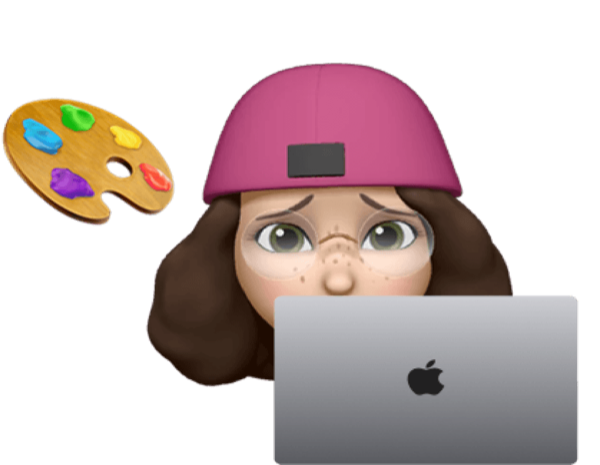
Maya stares at a wireframe for 45 minutes, stuck and frustrated.
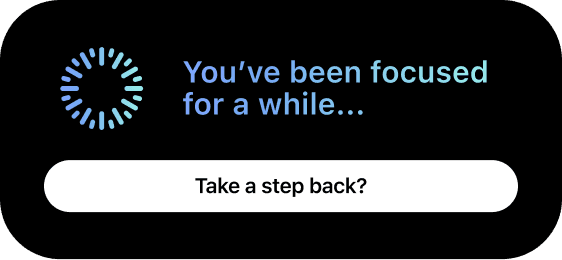
The island expands quietly. A presence grows at the top of her screen: "You've been focused for a while..."
Maya realises it's time for a break, and comes back to work refreshed and clear-headed.
Managing Time Perception in Health
The Health app intervenes and displays data in several ways:
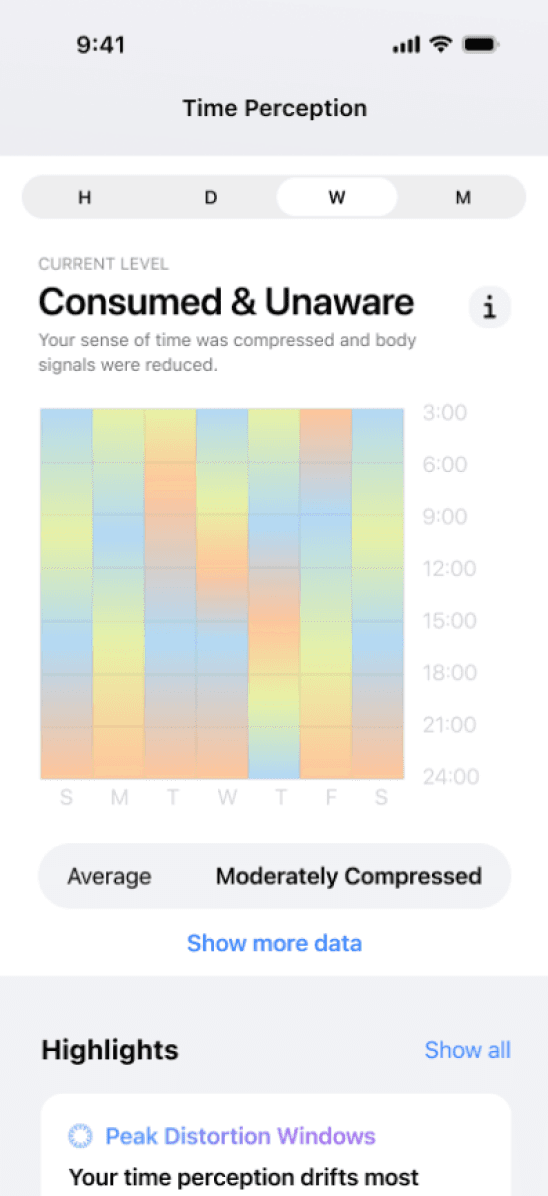
Summary
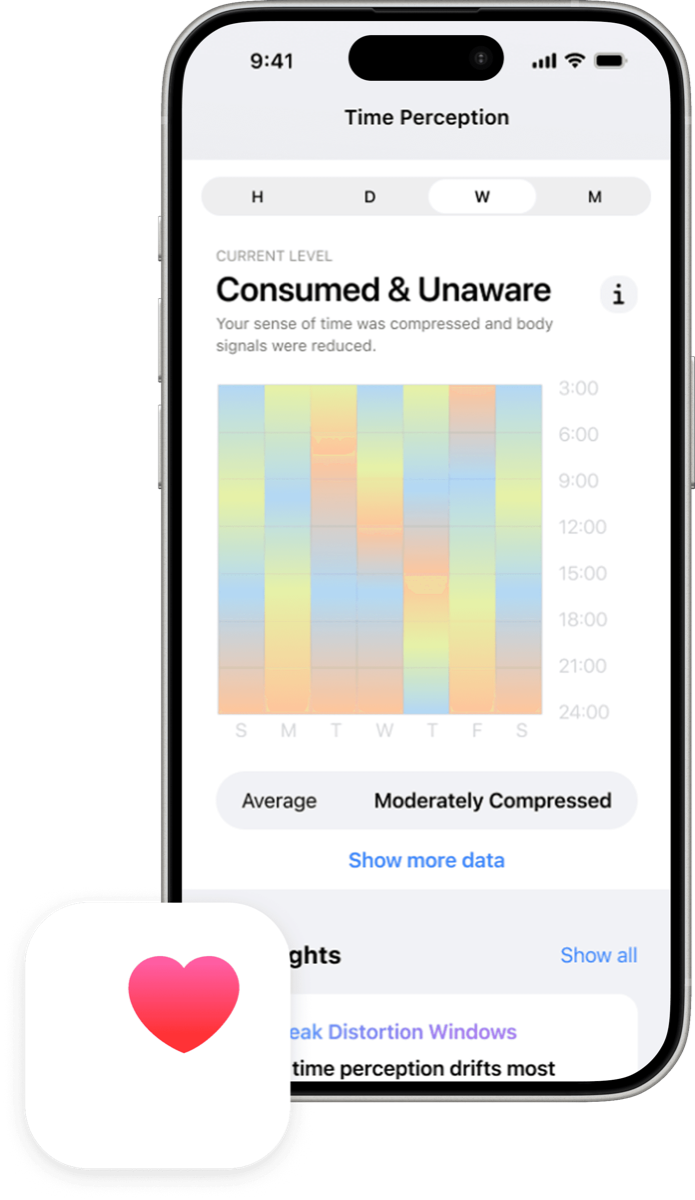
The label surfaces in real time when perception crosses a threshold. The graph gives a continuous, at-a-glance read of how perception has shifted through the week.
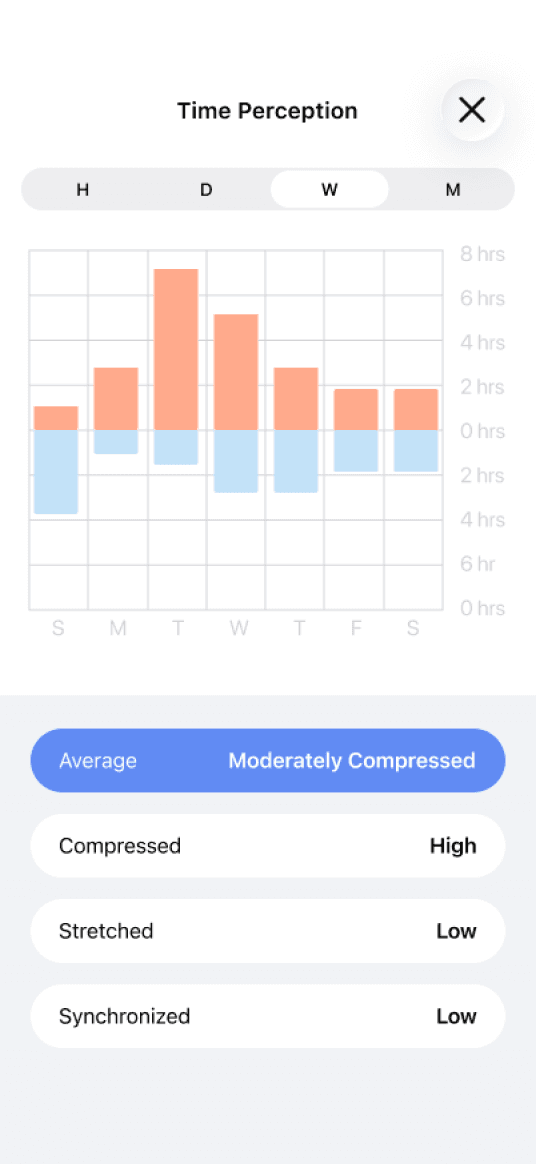
Show more data
Users can filter their history by hour, day, week or month, and toggle between four states to isolate the patterns that matter to them.
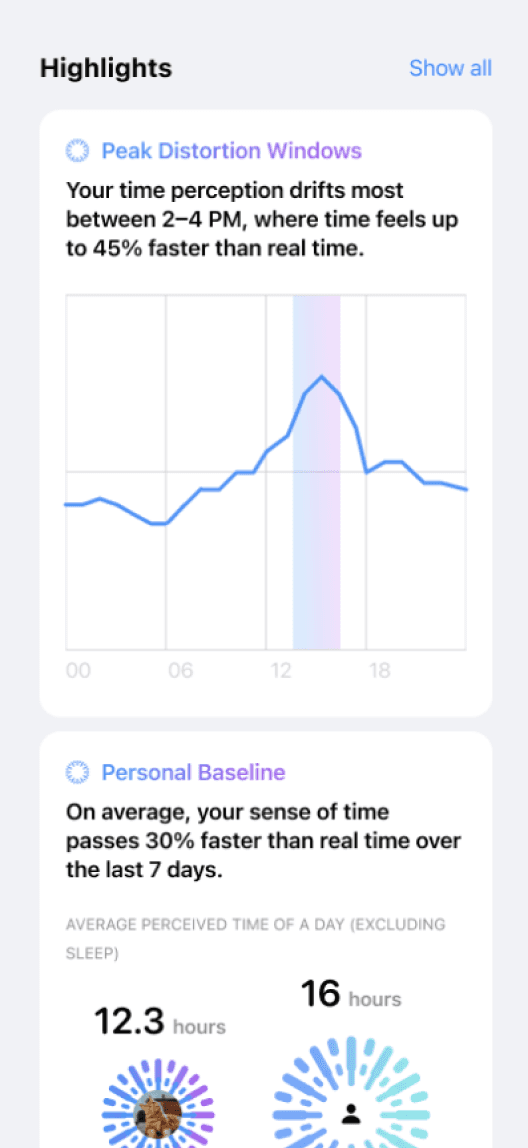
Highlights
Each card surfaces one insight (a pattern, a correlation, a comparison to baseline) so users can simply read it.
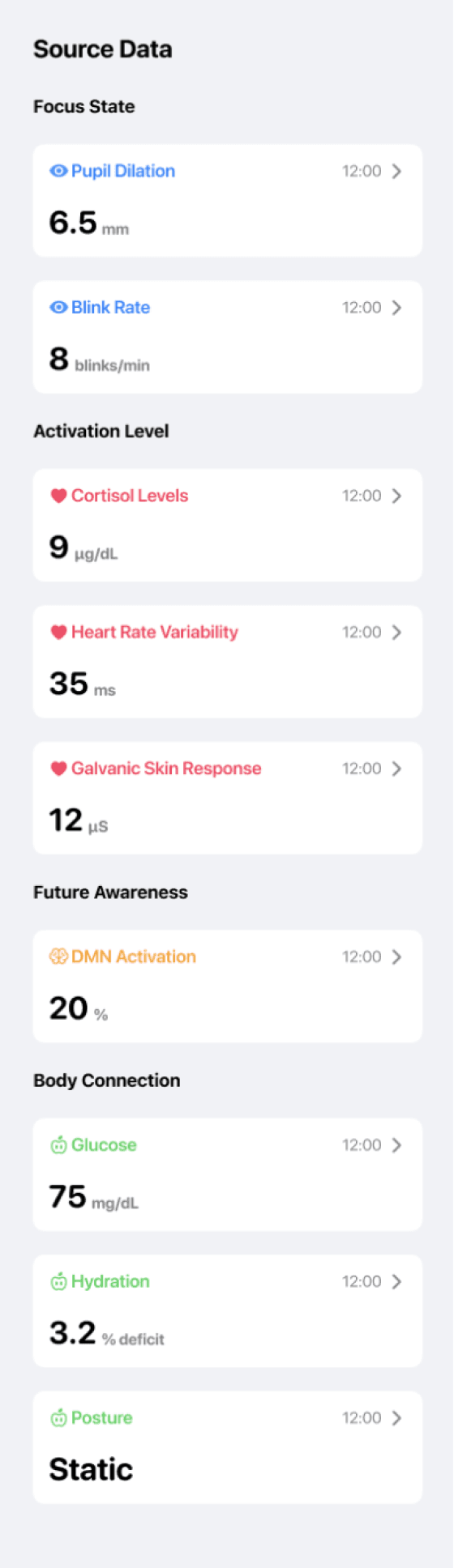
Source data
Gives transparency-conscious users a full view of the biometric signals feeding their perception measurement.
Safeguards
- All biometric processing happens on-device
- No raw footage stored or transmitted
- No "productivity scores" to share with employers or anyone external
- View, export, or delete data at any time
- Users can always dismiss interventions
- No guilt or shame in any messaging
- A translator that makes users more aware, never forces actions
- All language is neutral and observational
- Does not imply any judgement
- Describes what's happening, not what the user should have done
Inside the box, on purpose.
Looking back, some of our design decisions were restricted by Apple Health's existing brand and system. We chose it because we wanted something that passively fits into a person's life instead of adding one more thing on. In the future, we'd like to explore more creative interaction types that go beyond the boxes, maybe even into the world off screens.