The hackathon, in numbers
Things you need once, then never again.
Think a tuxedo for a formal, a projector for a movie night in, or a tent for one camping trip.
Buying something you'll use once is expensive, and most students don't have much room to store it afterwards. Borrowing from friends only works if one of them happens to own it.
Students wanted to share. They didn't trust strangers.
We interviewed 4 UBC students about borrowing and lending things.
Nobody liked buying for one use. But two of the four worries were about the other person: getting scammed by a lender you don't know, and getting your things back broken.
“Buying items for one-time use feels wasteful and unethical.”
2nd year, UBC
“Not knowing the lender’s identity makes me fear I might get scammed.”
3rd year, UBC
“My vacuum was returned broken, it made me hesitant to lend it again.”
3rd year, UBC
“Going back and forth trying to find a meetup time is difficult.”
3rd year, UBC
Two sides of every rental
Doesn't want to make a one-time investment for something they'll use once.
“If I’m only going to use an item once, I’d rather look at more temporary alternatives.”
- Needs an air mattress for a friend who's visiting.
- Can't afford a new one as a full-time student.
- Rents a basement suite with 1 roommate, so there's little space to keep things.
Owns items that are worth money or useful to someone, but they mostly sit idle.
- To know who they're lending to.
- Protection if an item comes back broken, lost or late.
- An easy way to agree on pickup and return times.
What students used instead
The options on the market had no safety built in. They mostly ran on trust.
| Convenience | Safety | Cost | UI / UX | |
|---|---|---|---|---|
| Once More | Centralized browsing, payment, and loan duration tracking. | Every user verifies their identity. | Low, transparent service fees. | Built for lending: listings, return reminders and user profiles. |
| Facebook Marketplace | Browsing, but no in-app payment and no structure for lending. | No identity check, no reliable way to prevent scams. | Free to list, but risky. Payment happens outside the app. | No dedicated flow. Coordination over text or in person leads to miscommunication. |
| Borrowing from friends | Scattered chats and inconsistent payment methods. | Safe. | Free. | N/A |
A secure, easy place to borrow and lend.
We focused on the two gaps from research: there was no structured way to lend, and your own circle of friends only has so much.
Existing apps, but no structured lending system.
Your circle of friends might not have the item you're looking for.
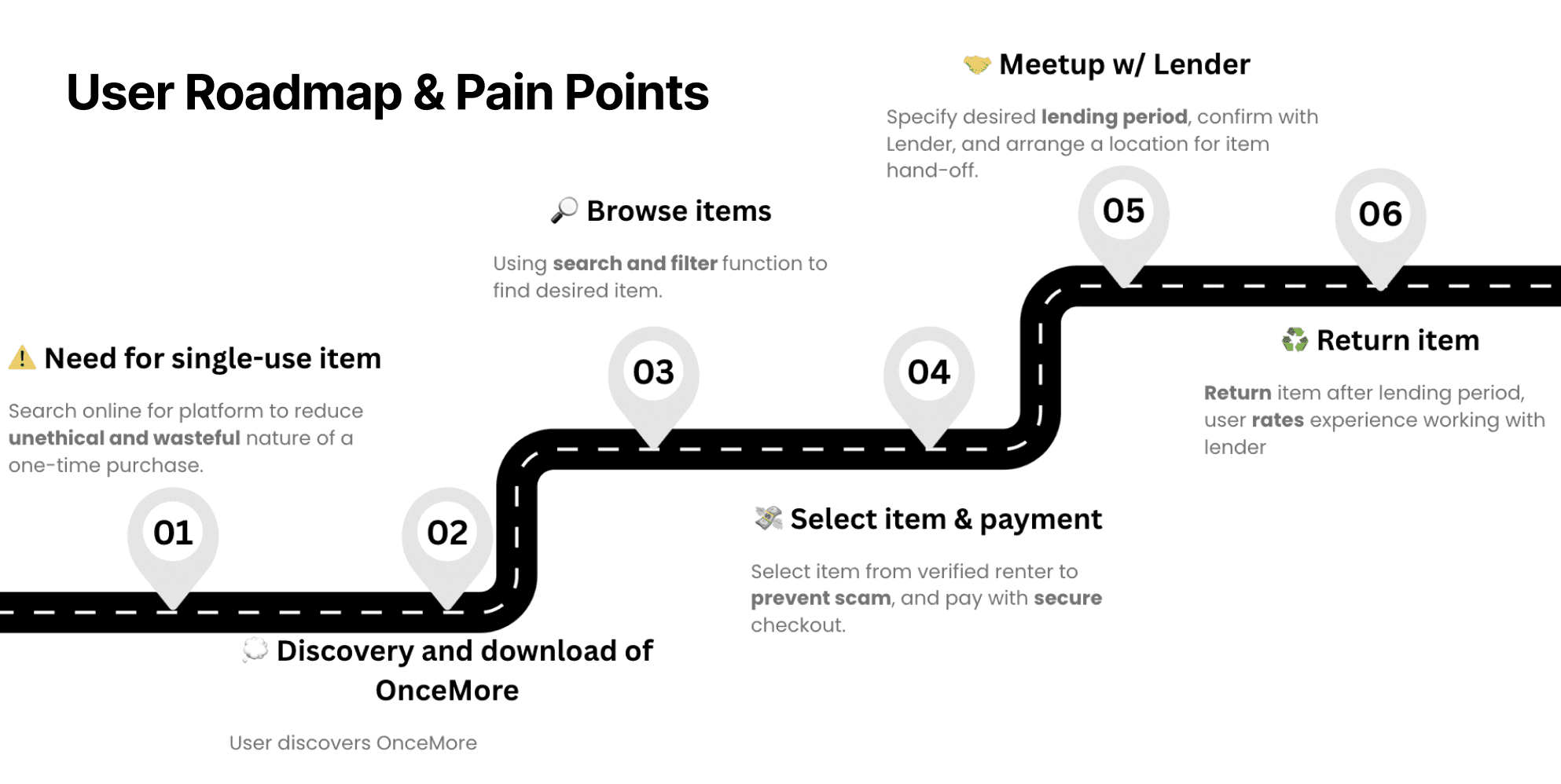
The journey we designed for
Six steps, from needing an item to giving it back, with the pain points we wanted to fix at each one.
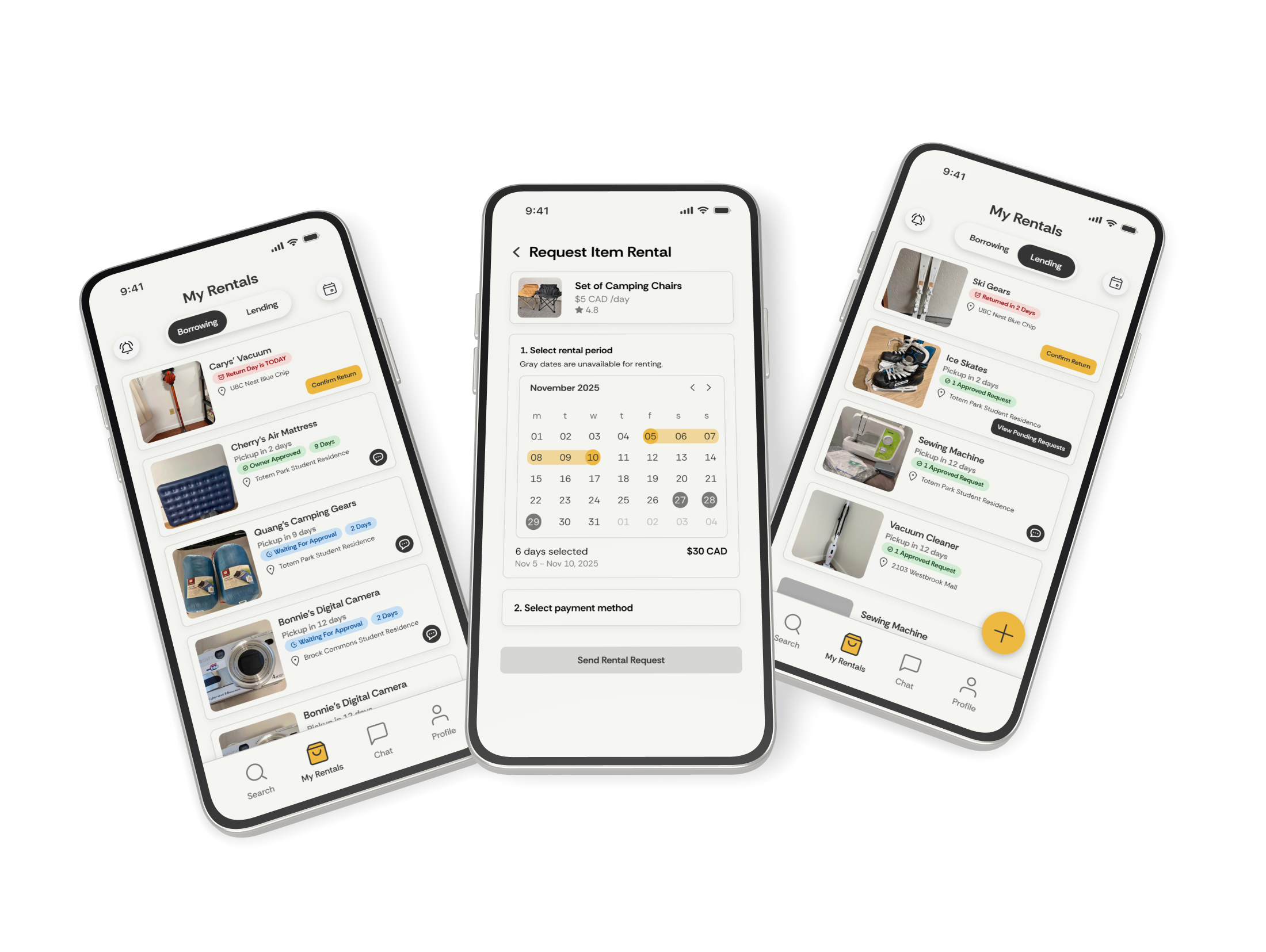
Search, My Rentals, Chat and Profile.
The app has four main tabs. Here's how a borrower finds an item, requests it, and keeps track of it, with trust built in at each step.
Finding an item
We wanted people to find the item they're looking for quickly. The filter covers price, distance, rating and availability.
The owner's ratings, reviews and Verified badge sit right under the item name, along with the brand, current status, a description and an approximate pickup spot.
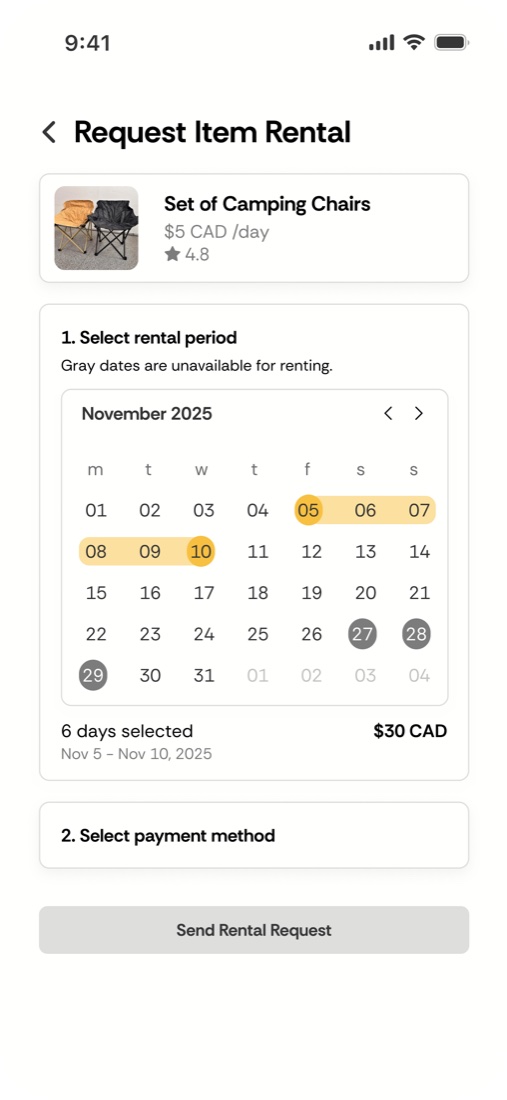
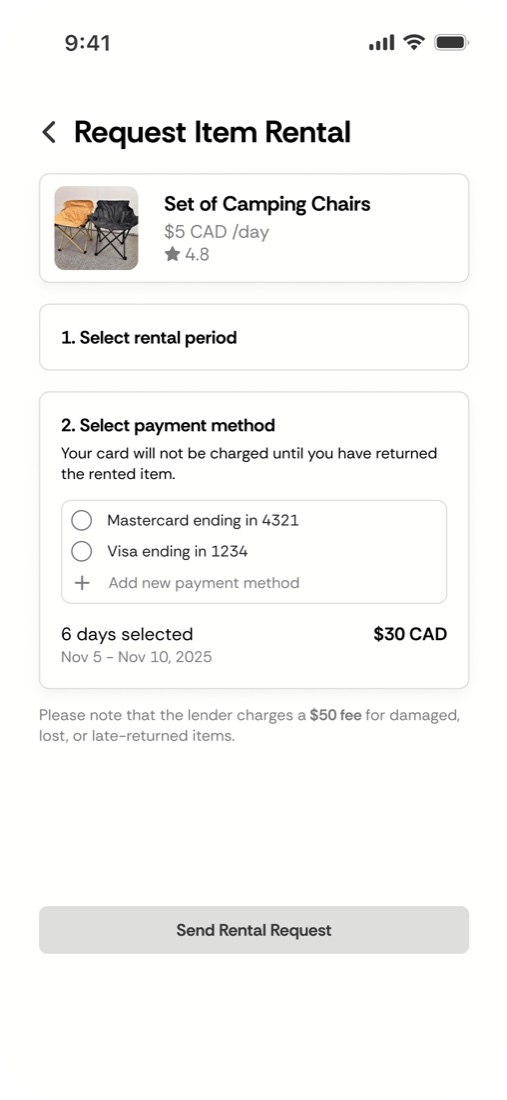
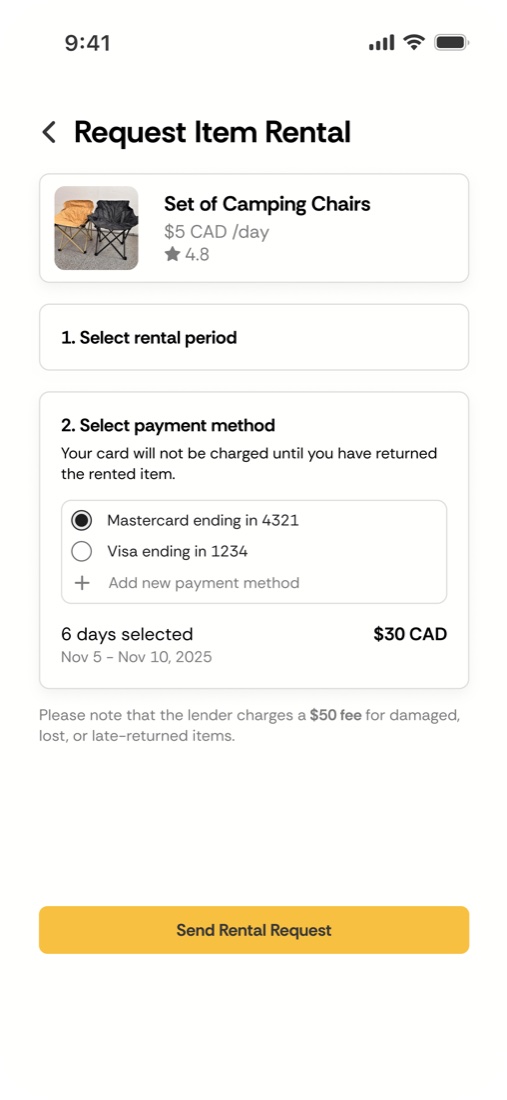
Requesting a rental
Payment happens in the app, so nobody has to sort it out over text. The card is only charged after the return because the prepayment would include the deposit, and we didn't want to pressure people into paying a large amount before they've even used the item. The $50 fee for damaged, lost or late items gives lenders security.
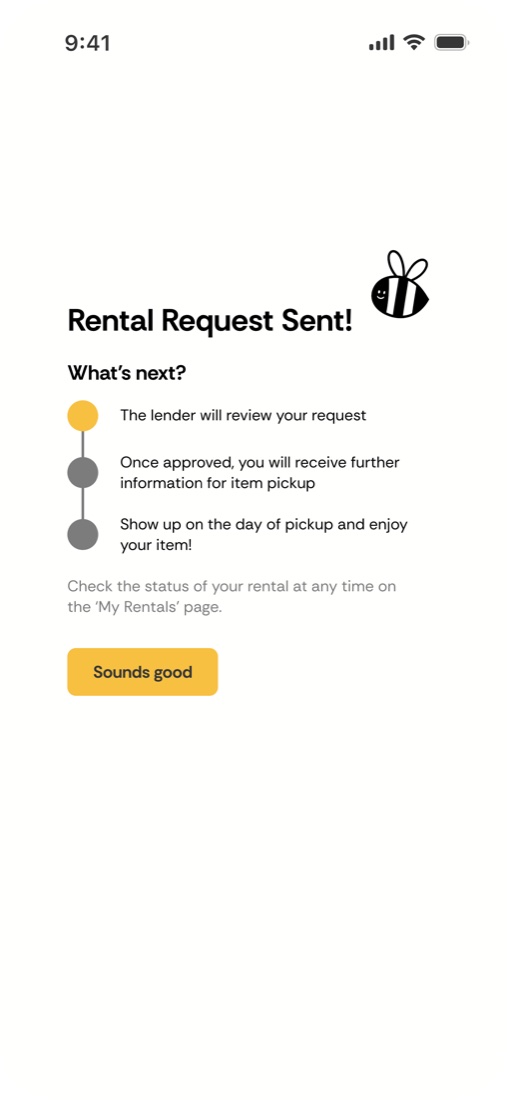
Keeping track in My Rentals
One place to manage the status of every item, split into Borrowing and Lending. From Lending, the + button publishes a new listing.
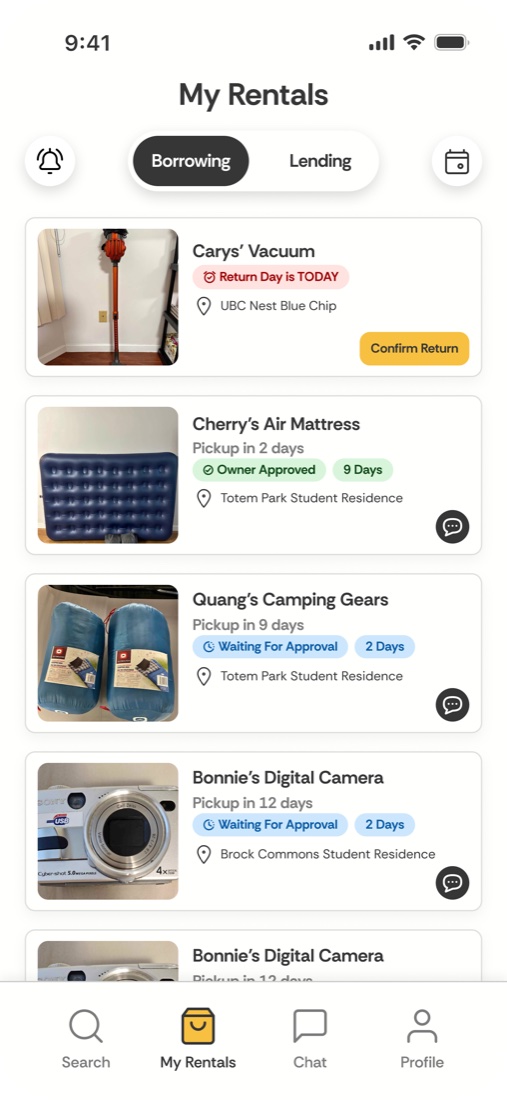
Tags like Return Day is TODAY, Owner Approved and Waiting For Approval, the pickup spot, and a chat button on each item.
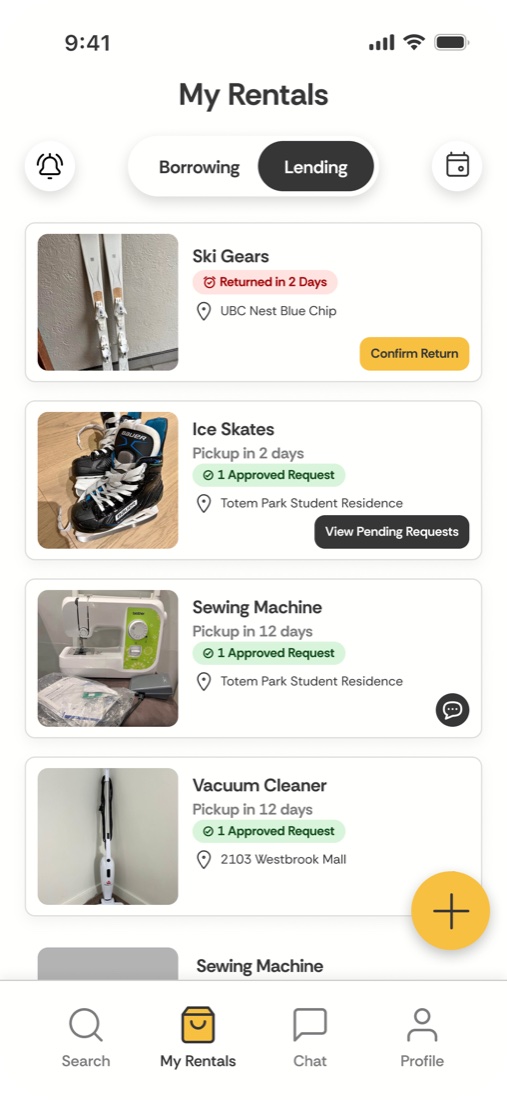
Lenders see pending requests and upcoming returns for each item, and add new listings with the + button.
Lenders add the item's name, at least two photos, its condition and a short description, then set the available dates, a maximum borrow duration and how to hand it over. A Review Summary shows everything before it goes live in My Rentals.
After the win.
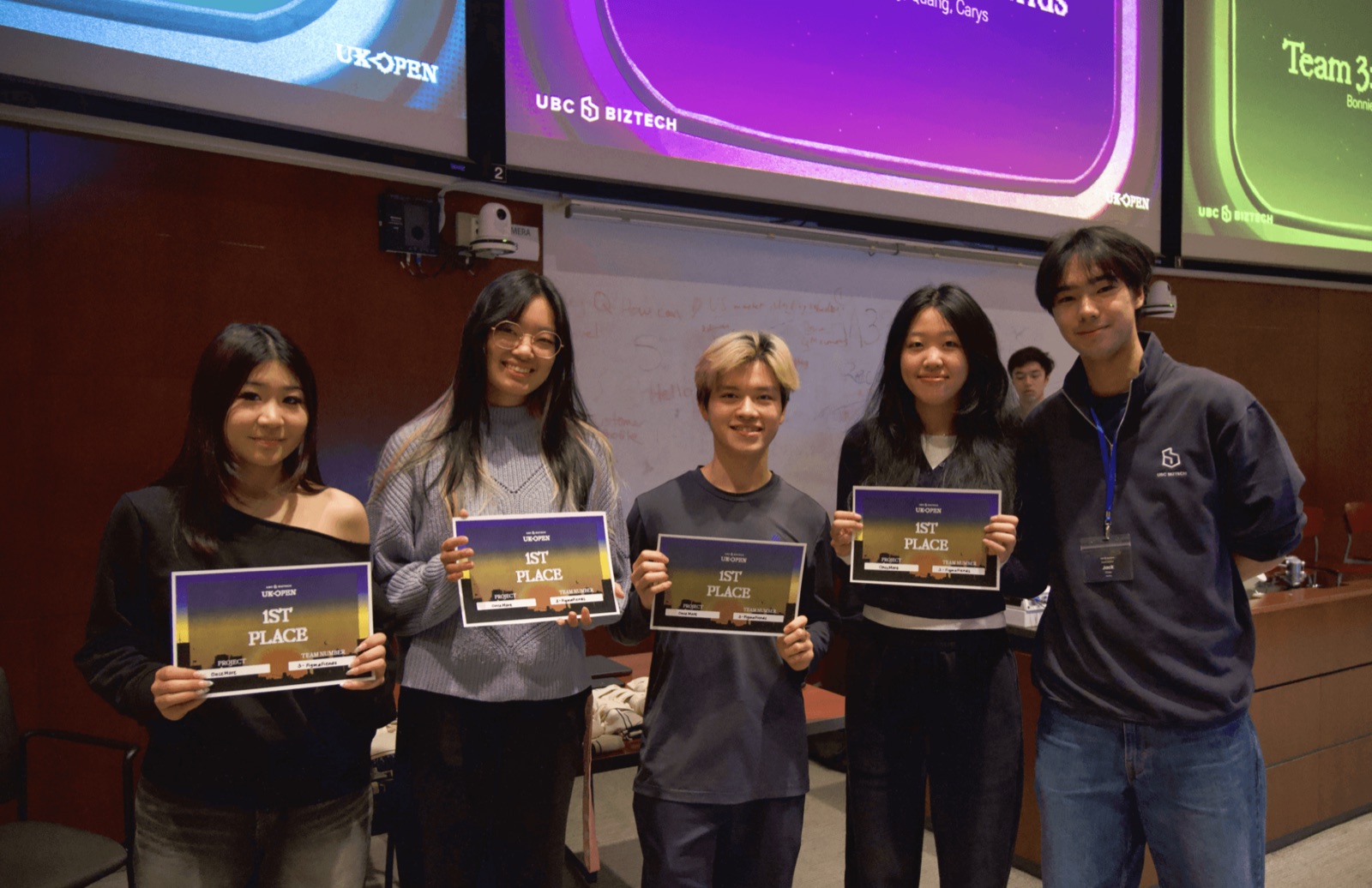
After winning UX Open, we wanted to see if Once More could work as a startup. We joined KickStart 2025 and built the frontend in code, then started on the backend.
Once More taught me how to design a commerce product with multiple stakeholders. Borrowers and lenders want different things, so we built a user persona for each side and had to design for both at once. It also showed me how much trust depends on incentives: the in-app payment and the $50 fee for damaged, lost or late items are there so lenders feel safe handing their things to someone they don't know.